Two player pen and paper games need only paper and a pen or two, so you can start any of these ten right now. Each has its rules in a few lines, a time and a tip. Pick tic-tac-toe if you have a minute, and dots and boxes, gomoku or Battleship if you have ten.
A paper-and-pencil game, Wikipedia says, is one you can play with just paper and writing tools. Most of these work with a single pen, since you can mark X and O or write your initials. The times below are rough guesses, and a game between two careful players won’t be quick.
1. Tic-tac-toe: about 30 seconds
Draw a grid of 3 by 3 squares. X and O take turns, and whoever gets three in a row first, across, down or diagonally, wins.
It’s a solved game. With best play from both sides, Wikipedia says, it ends in a draw. If you count every move order, there are 255,168 possible games, according to Norman Do’s article in the Australian Mathematical Society Gazette. Treat rotations and reflections as the same and it falls to 26,830.
Too easy? Take turns going first, or play on a bigger grid and ask for more in a row. That’s the idea behind gomoku (game 6). Keep losing to the same person? The win, block, fork checklist shows the reply to every opening.
2. Hangman: about 2 minutes
One player picks a word and draws a dash for each letter. The other guesses letters. Each right letter goes into every spot where it appears. A wrong guess adds a part to a stick figure on a gallows. You win if you complete the word before the figure is finished. You may guess the whole word at any time, though a wrong word costs you a body part, says Wikipedia.
A tip for each seat. As the guesser, lean on the common English letters, led by E, T, A, O, I and N. Setting the word? Choose words with rare letters: Wikipedia reports that a 2010 Wolfram Research study named jazz, buzz, hajj, faff and fizz among the hardest. The best letters to guess first change with the length of the word.
3. Battleship on paper: about 10 minutes
Each player draws two 10 by 10 grids: one hidden, for your own ships, and one that’s for tracking your shots. The setup is standard: The Official Game Rules Team describes the two grids, and Hasbro’s rules sheet lists five ships of 5, 4, 3, 3 and 2 squares.
Hide your fleet, and draw each ship in a straight line along the rows or columns. Then take turns calling a shot by its coordinate, like D-4. The other player says hit or miss. Agree before you start whether a hit also names the ship: Hasbro’s current rules do. The first player to sink all five ships wins.
The paper version came first. The Strong National Museum of Play says Russian officers reportedly played a game on a hand-drawn paper grid in World War I, and Milton Bradley published the plastic Battleship in 1967. Want to find and sink every ship faster? Read the checkerboard-and-hunt method.
4. Dots and boxes: about 10 minutes
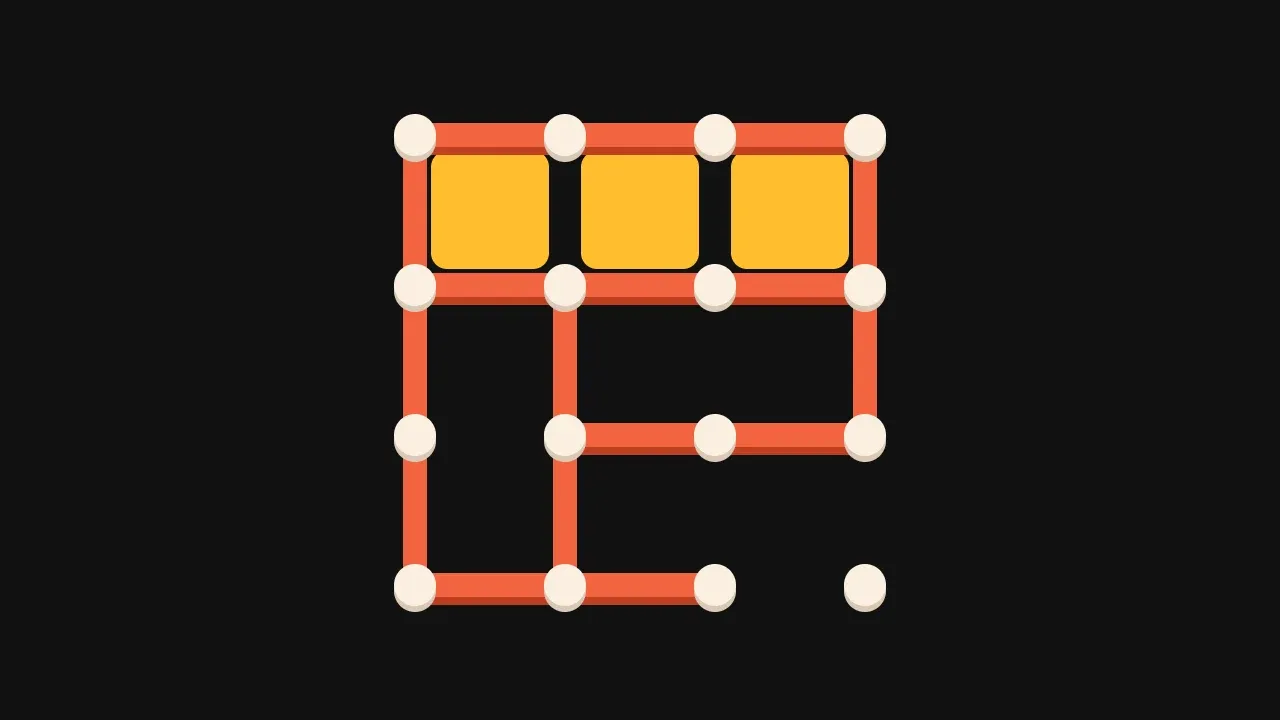
Start with a grid of dots. On your turn, draw one line between two neighbouring dots. If your line completes the fourth side of a box, you score it, usually by writing your initial inside, and you draw again. When no lines are left, the most boxes wins, per Wikipedia.
For your first game, use a 4 by 4 grid of dots. That makes 3 by 3 boxes, which is nine, and since each box goes to one player, an odd count can’t tie. Wikipedia calls a board of 2 by 2 boxes good for learning and 5 by 5 boxes good for experts.
The game was first published by the French mathematician Édouard Lucas in the 1800s, under the name “la pipopipette” (see Strick’s biography of him and the Wikipedia page above). The idea to learn is the chain: a row of boxes where one line gives away the whole run. The long-chain rule explains when to take a chain and when to hand it over.
5. Sprouts: about 5 to 10 minutes
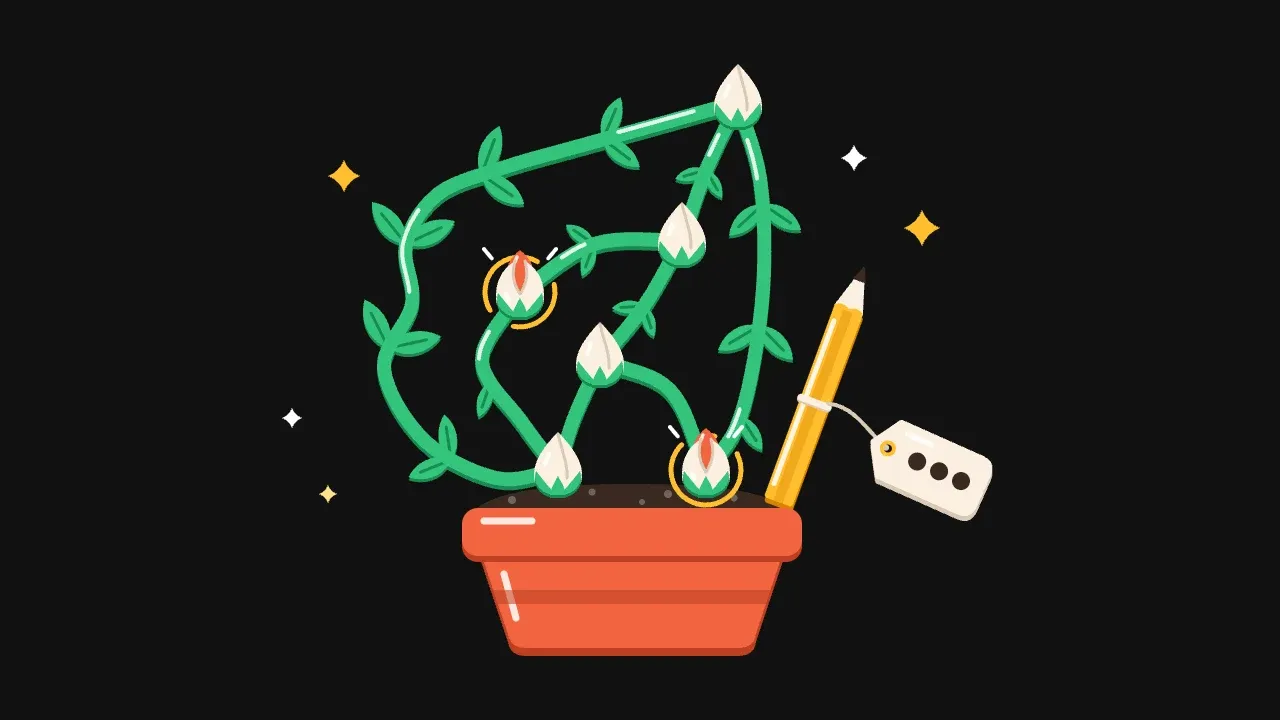
Start with a few spots on the page. Two’s plenty for a first game. On your turn, you draw one line and add one spot:
- Draw a line, straight or curved, from one spot to another, or from a spot back to itself.
- Put a new spot somewhere on that line.
Lines may never cross or touch anything, and no spot can carry more than three lines, so you can’t keep going forever. A loop counts as two lines, and a new spot starts with two. The player who makes the last move wins, say Wikipedia and MathWorld.
It always ends. With n starting spots, a game lasts at most 3n − 1 moves, according to MathWorld, so a two-spot game is over within 5 moves. That means someone always wins. It was invented by John Conway and Michael Paterson at Cambridge in the 1960s. Want a whole game drawn move by move? You’ll find it in how to play Sprouts.
6. Gomoku (five in a row): about 10 minutes
Gomoku is five in a row on a big grid, and it’s simple to learn. Two players alternately put down a mark, and the first to make an unbroken line of five wins. The traditional board is 15 by 15, per Wikipedia, and on paper you can use graph paper with X and O.
The first player has an advantage. In freestyle play on an empty 15 by 15 board, Louis Victor Allis showed in 1994 that the first player can force a win, which is why tournaments use opening rules. So take turns going first. If the paper fills up with no five, it’s a draw. The full rulebook is in five in a row on paper.
7. Sim: about 5 minutes
Draw six dots in a hexagon and join every dot to every other with a line, in pencil: that’s 15 lines. Players take turns colouring one line, each in their own colour, and you can’t recolour a line. Whoever completes a triangle of only their own colour, with its corners at the dots, loses.
Gustavus Simmons introduced it in 1969, according to Wikipedia and a 2020 paper by Wrzos-Kaminska.
Why can Sim never end in a tie? That paper explains it: any way of colouring the lines of six points in two colours contains a single-colour triangle, because the Ramsey number R(3,3) is 6. The second player wins with perfect play. A strategy that human players can follow easily was only found in 2020.
With one pen, use solid lines for one player and dashed lines for the other. Two colours are easier to read.
8. Bulls and Cows: about 10 minutes
It’s a code-breaking game. Each player secretly writes a four-digit number with no repeated digits. You take turns guessing the other’s number. After each guess, your opponent gives two counts: a bull is a right digit in the right place, and a cow is a right digit in the wrong place. The first to reveal the other’s number wins, says Wikipedia.
An example: the secret is 4271 and you guess 1234. The 2 is in the right place, so that’s one bull. The 1 and the 4 are in the secret but in other places, so that’s two cows. The 3 isn’t in it at all, so it scores nothing. So the reply is “1 bull, 2 cows”, and you’ll use that to narrow the guesses.
There are 5,040 possible secrets (10 × 9 × 8 × 7), and Wikipedia says any of them can be solved within seven turns with optimal play. Want to crack the secret number faster? Start from a smart opening guess.
9. SOS: about 5 minutes
Draw a square grid, at least 3 by 3 squares. Players take turns writing an S or an O in any empty square, and you can switch letters from turn to turn. Spell S-O-S in a straight line, across, down or diagonally, and you score a point and take another turn. When the grid is full, the most SOSs wins, and equal counts is a draw, say Wikipedia and Game On Family.
Grids of 5 by 5 or 6 by 6 are common, and 3 by 3 makes a quick round. There’s a variant where the first SOS wins outright, so say which one you’re playing before you start, or you’ll argue over the score.
10. Hexapawn: about 3 minutes
Hexapawn is a tiny chess-like game. Draw a 3 by 3 board and put three pawns each on the row nearest you. A pawn moves one square straight forward onto an empty square, or one square diagonally forward to capture. There’s no two-square first move. You win by getting a pawn to the far row, or by leaving your opponent with no legal move, according to Wikipedia’s page on hexapawn.
Martin Gardner described it in his “Mathematical Games” column in Scientific American in March 1962. It was built to show that a simple machine could learn. The game can’t end in a draw: pawns only move forward, and a player who can’t move loses. On the 3 by 3 board the second player wins with perfect play.
Going first means hoping your opponent slips, since the second player can always win. Word fans who’d rather race with letters than push pawns can try word ladder games for two.
Which two-player paper game should you pick?
Start from the time you have, then think about who’s playing.
| Game | About how long | Pick it when |
|---|---|---|
| Tic-tac-toe | 30 seconds | You want the easiest rules there are |
| Hangman | 2 minutes | You’d like a word game with simple rules |
| Hexapawn | 3 minutes | You want a tiny board with real strategy |
| Sim | 5 minutes | You want a game that can’t end in a tie |
| SOS | 5 minutes | You want easy rules and a bit of scheming |
| Sprouts | 5 to 10 minutes | You like drawing and want a game that always ends |
| Dots and boxes | 10 minutes | You want a long-chain plan to work out |
| Battleship | 10 minutes | You enjoy guessing and hiding |
| Gomoku | 10 minutes | You want the most room to build a plan |
| Bulls and Cows | 10 minutes | You’d rather deduce a number than draw |
Tic-tac-toe, hangman and SOS have the simplest rules. Sprouts, dots and boxes and Sim suit people who like to think a few moves ahead. For younger players, start with tic-tac-toe, hangman or SOS: their rules fit in two or three sentences.
Need a game that won’t end in a tie? Sim and hexapawn can’t tie, Sprouts always ends, and dots and boxes on 4 by 4 dots can’t tie. Tic-tac-toe, gomoku and SOS can all end in a draw.
Playing alone instead?
If the other player isn’t around, calm pen and paper games for one has six quiet ones, and you can pass any of them to a friend. Try it with Loopaway, a free arrow puzzle in your browser where you tap each arrow to slide it off the board.
Frequently asked questions
What are good pen and paper games for two people?
Tic-tac-toe, hangman, Battleship, dots and boxes, Sprouts, gomoku, Sim, Bulls and Cows, SOS and hexapawn all work for two. Pick tic-tac-toe or hangman when you have a minute, and dots and boxes, gomoku or Battleship when you have ten.
What can you play on paper with just one pen?
Tic-tac-toe, hangman, Sprouts, dots and boxes, gomoku, SOS and Bulls and Cows all work with a single pen, since you can mark X and O or write initials. Sim needs two colours, or solid lines against dashed ones.
Which two-player paper games need no setup?
Tic-tac-toe, hangman, Sprouts, Bulls and Cows and SOS need no setup: a grid or a few spots takes seconds to draw. Battleship, gomoku and Sim need a bigger board drawn first.
Is there a pen and paper game that always has a winner?
Yes. Sim can never end in a tie, hexapawn can't either, and Sprouts always ends with a last mover who wins. Dots and boxes on a 4 by 4 grid of dots has nine boxes, so it can't tie either.
Sources
- Paper-and-pencil game, Wikipedia
- Tic-tac-toe, Wikipedia
- How to Win at Tic-Tac-Toe (Norman Do), Australian Mathematical Society Gazette
- Hangman (game), Wikipedia
- Battleship rules sheet F4527, Hasbro
- Battleship, The Official Game Rules Team
- Battleship history, The Strong National Museum of Play
- Dots and boxes, Wikipedia
- Édouard Lucas (Heinz Klaus Strick, trans. St Andrews)
- Sprouts, Wolfram MathWorld
- Sprouts (game), Wikipedia
- Gomoku, Wikipedia
- A simpler winning strategy for Sim (Wrzos-Kaminska), arXiv:2001.04024
- Sim (game), Wikipedia
- Bulls and Cows, Wikipedia
- SOS (paper-and-pencil game), Wikipedia
- How to Play SOS Game, Game On Family
- Hexapawn, Wikipedia