Learning how to read cryptic crossword clues starts with a clue that looks like nonsense: “Broken pastel dishes (6)”. Every word seems to mean something else, and you can’t tell where to start. The good news is that every cryptic clue has the same two parts, and five tricks cover most of what you’ll meet. Each one is solved step by step here, then you get five clues to try, with hidden answers.
What is a cryptic crossword clue?
A cryptic clue has a plain meaning and a little word puzzle in one line. The answer is given twice: once by its meaning, and once by its letters.
The number in brackets is the answer’s length, as in an ordinary crossword. (6) means six letters.
Solving feels like decoding, not remembering facts, so you don’t need to know obscure words.
How to read cryptic crossword clues: the golden rule is to split them
Every clue has two parts. The definition is a plain meaning of the answer. The wordplay is a set of instructions for building the answer’s letters. The definition is always at the start or the end of the clue, never in the middle.
Take “Broken pastel dishes (6)”. Try the split both ways. Is “Broken pastel” the definition and “dishes” the wordplay? That makes no sense. “Dishes” as the definition and “Broken pastel” as the wordplay does, so that’s the split.
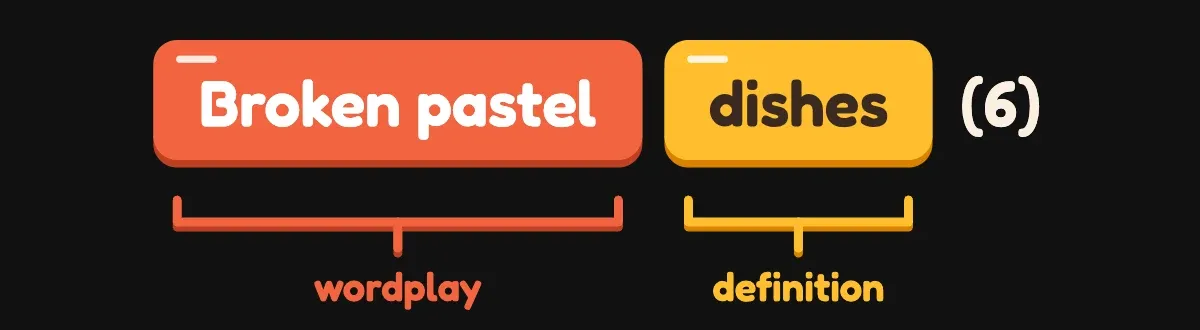
Both halves point to the same answer, PLATES, so the clue checks itself twice.
Link words like “for”, “in”, “from” and “is” often sit between the two parts and mean nothing on their own. The surface meaning is a disguise: the clue reads like a normal sentence about something else, so ignore what the sentence seems to say.
1. Anagram: jumbled letters
The clue holds the answer’s letters in the wrong order. The fodder is the letters to rearrange, and the indicator is a word that says they are mixed up.
Indicators to watch for: broken, mixed, wild, crazy, confused, awful, dancing, cooked, novel, silly, out.
Solve “Broken pastel dishes (6)” step by step. The indicator is “broken”. The fodder is PASTEL, six letters, which matches the (6). Rearranged, it gives PLATES, and “dishes” agrees. PASTEL also rearranges to STAPLE. Which one is it? The definition picks PLATES.
Tip: write the fodder letters in a circle or in alphabetical order to see the words more easily.
2. Hidden word: the answer is already there
Where’s the answer? It sits, in order, inside the letters of the clue, often spread over two or more words.
Indicators to watch for: some of, part of, found in, within, inside, held by, in, hides, buried in.
Solve “Gem found in cheap earlobes (5)”. The indicator is “found in”. Look through the letters of “cheap earlobes” for a five-letter word: cheaP EARLobes gives PEARL. The definition is “gem”.
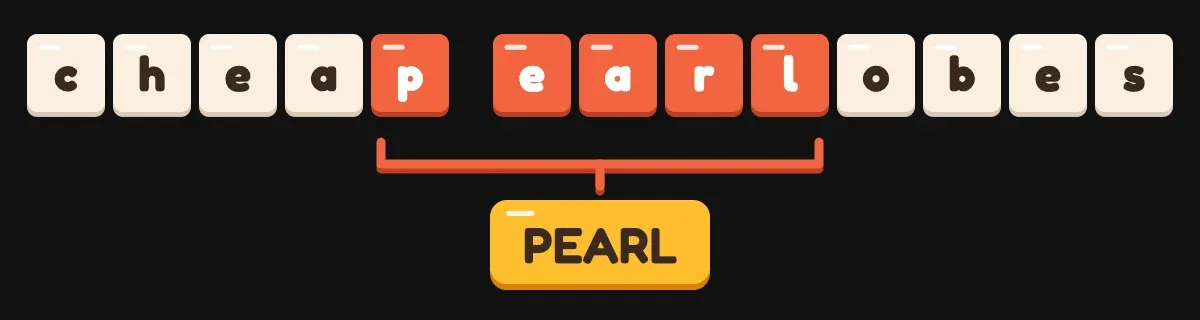
Tip: ignore spaces, and spot the answer across word breaks. The definition tells you what you are looking for.
3. Reversal: the word runs backwards
A word is spelled backwards to make the answer. In an across clue, the indicator suggests moving back or left.
Indicators to watch for: back, returned, reversed, going back, retiring, from the east or going west (across clues).
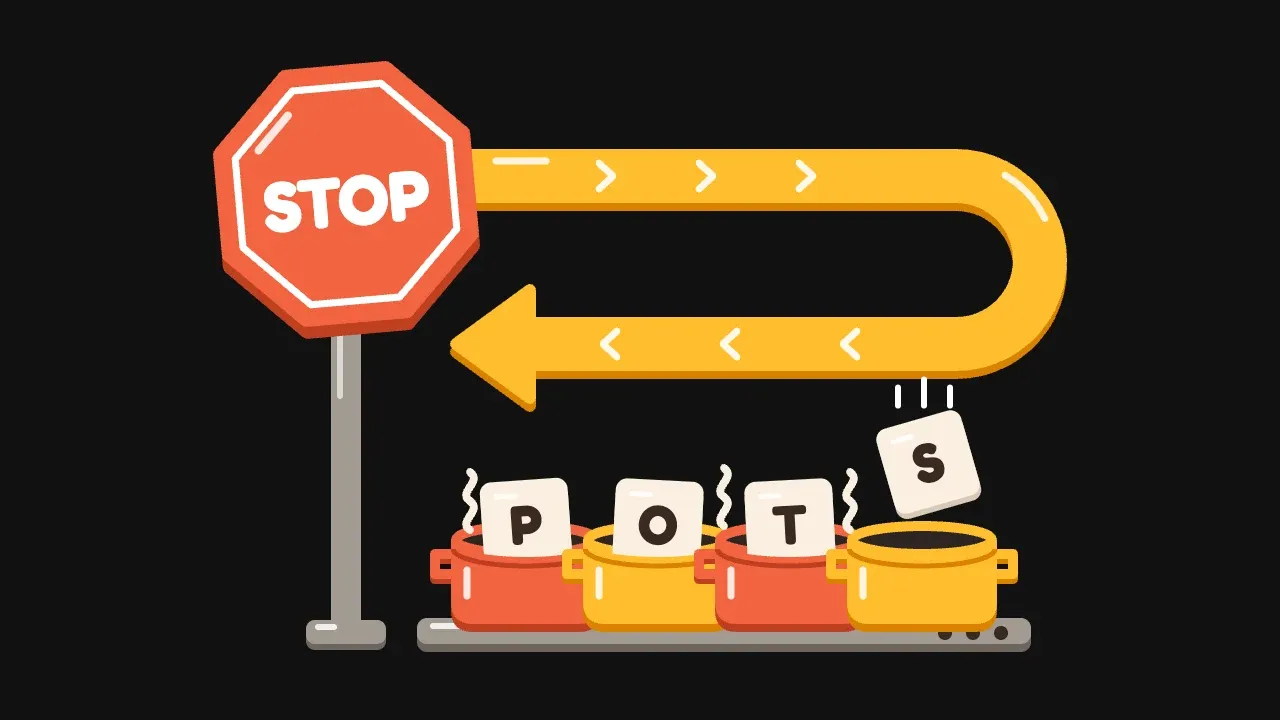
Here’s one clean example: “Stop going back for kitchen vessels (4)”. The indicator is “going back”. The fodder is STOP. Reversed letter by letter, S-T-O-P becomes P-O-T-S, so the answer is POTS. The definition is “kitchen vessels”.
Tip: write the fodder out backwards, one letter at a time, starting from the last.
4. Container: one word goes inside another
One word is placed inside another to make the answer. The indicator tells you which word holds which.
Indicators to watch for: holding, around, outside, about, keeps, swallows, clutching, in, inside, entering.
Solve “Decorate with pat holding in (5)”. The indicator is “holding”. The outer word is PAT and the inner word is IN. PAT splits after PA (PA-T), and IN goes between: PA + IN + T makes PAINT. The definition is “decorate”.
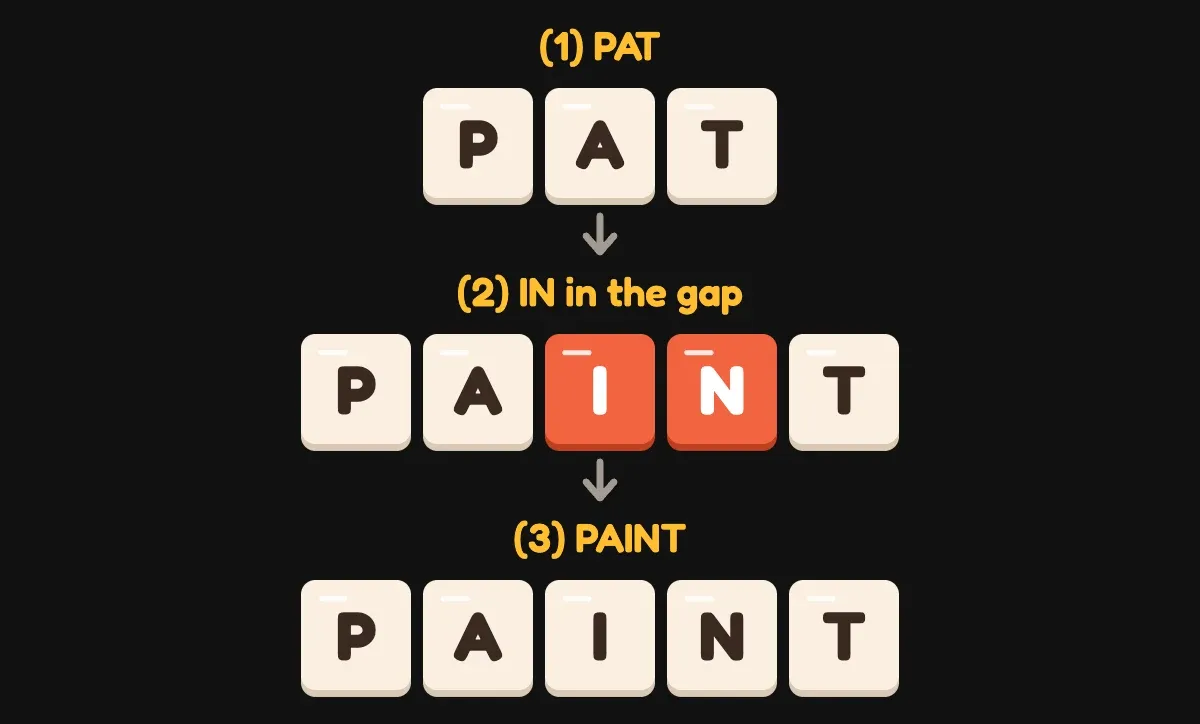
Tip: if the clue says A holding B, B goes inside A. If it says A in B, A goes inside B. Check the letter count after.
5. Homophone: it sounds like another word
The answer sounds like another word, and the clue points to it. The indicator is about speaking or hearing.
Indicators to watch for: we hear, reportedly, it’s said, aloud, on the radio, so we’re told, in conversation, for the audience.
Solve “Ocean, reportedly, to look at (3)”. The indicator is “reportedly”. OCEAN means SEA, and that’s the word you say aloud. SEA sounds like SEE, and “to look at” is the definition. The answer is the soundalike, not the word you started with.
Tip: sound it out, since spelling doesn’t matter. Pairs like sea and see, plane and plain, and knight and night are favourites.
How to start any cryptic clue
Use this short routine every time:
- Count the letters in the brackets.
- Look for the indicator, the word that tells you what to do with the other letters.
- Split the clue into definition and wordplay, trying the start and the end.
- Do the wordplay and count the letters.
- Check the answer against the definition.
Stuck? Try every word as a possible indicator, say the clue aloud, and use crossing letters from other answers in the grid (see how to solve a crossword).
Learn these five first. Setters use many other tricks, such as a word plus a word, joined letters or first letters.
Try five cryptic clues
Each clue below uses one of the tricks. Have a go, then open the answer.
Silly lemon becomes a fruit (5)
Show the answer
MELON. Definition: fruit. Indicator: silly. Fodder: LEMON, rearranged.
Drink found in cheat earlier (3)
Show the answer
TEA. Definition: drink. Indicator: found in. Hidden in cheaT EArlier.
Exist, with evil going back (4)
Show the answer
LIVE. Definition: exist. Indicator: going back. EVIL reversed.
Shore, small bed holding as (5)
Show the answer
COAST. Definition: shore. Indicator: holding. COT (a small bed) holding AS gives CO(AS)T.
Aircraft, it’s said, ordinary (5)
Show the answer
PLAIN. Definition: ordinary. Indicator: it’s said. It sounds like PLANE, an aircraft.
How did you do?
Even solving one or two is a good start. The habit is to split the clue, spot the indicator, then build the answer. Want the history of the puzzle itself? Read who invented the crossword.