Who invented the crossword puzzle? The one you do with your coffee began in 1913 as a diamond-shaped puzzle on a newspaper’s Sunday fun page, and a typesetting slip gave it the name it has today. The short answer is Arthur Wynne. Below: his puzzle, the older grids that came before it, and how it grew into a craze. Then a small word-cross to try yourself.
Who invented the crossword puzzle? Arthur Wynne, 1913
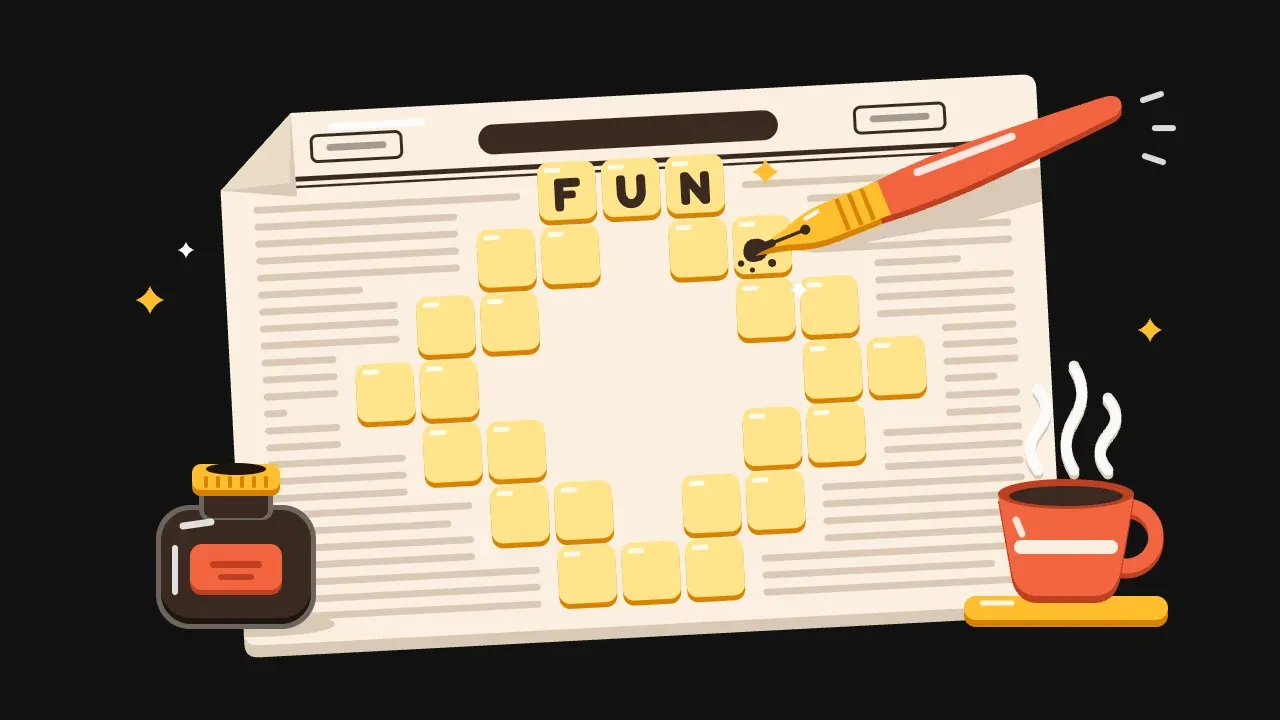
Arthur Wynne was a journalist, born in Liverpool in 1871, who worked in New York. He edited the Sunday Fun page of the New York World, and his puzzle ran there on December 21, 1913. It’s the one usually called the first modern crossword.
Did he invent it from nothing? Not quite. Word grids existed before him, so it’s fairer to say Wynne shaped and popularised the form. The next sections show some of the earlier ones.
Wynne didn’t call his creation a crossword. He called it a Word-Cross.
What the first crossword looked like
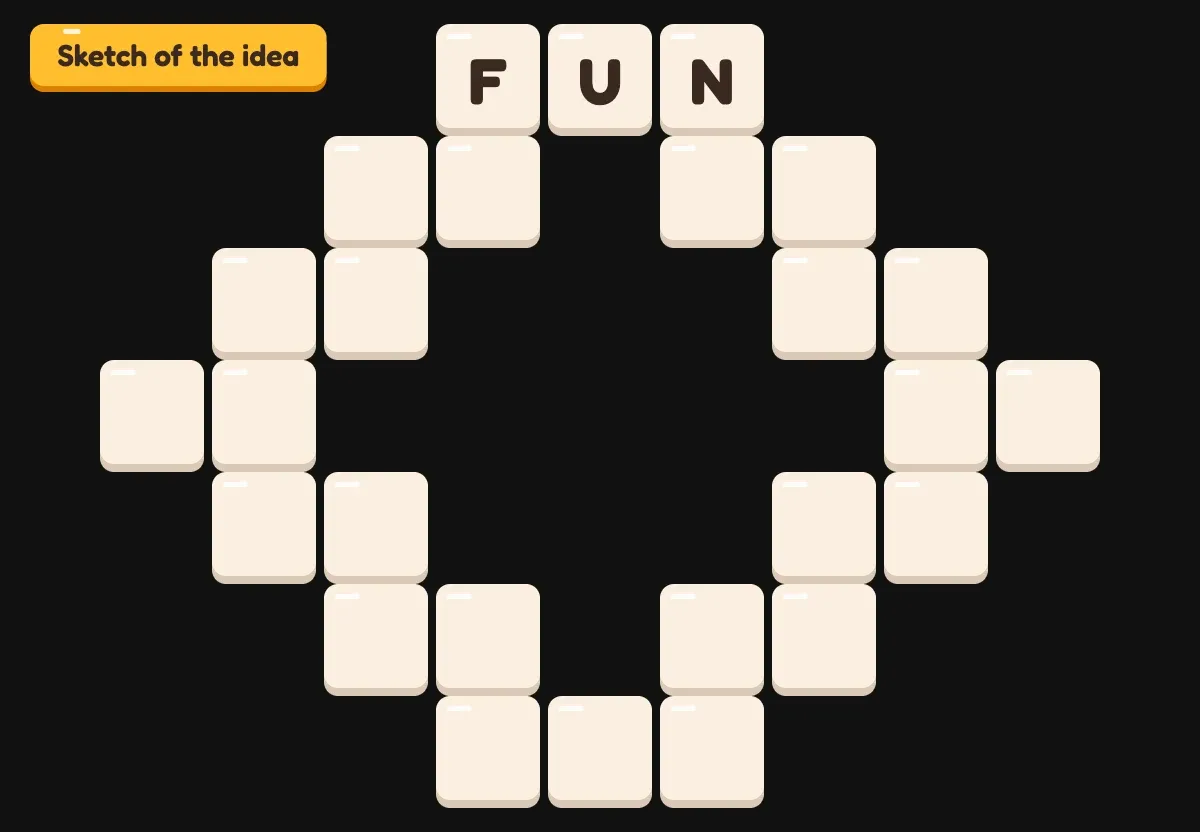
The first puzzle was a hollow diamond. The word FUN was already written into the grid as a starter, which suited the page it ran on. The clues were simple, with no cryptic tricks, and a list of them sat beside the grid.
How did it differ from today’s puzzles? There were no black squares inside the grid, and the numbers marked the start and end of each answer rather than following the pattern we know now. Sources describe these small details in different ways, so treat this as an outline.
Mental Floss quotes one clue from that first puzzle, about the fibre of the gomuti palm. It shows how bookish the clues were.
How a typo made it a crossword
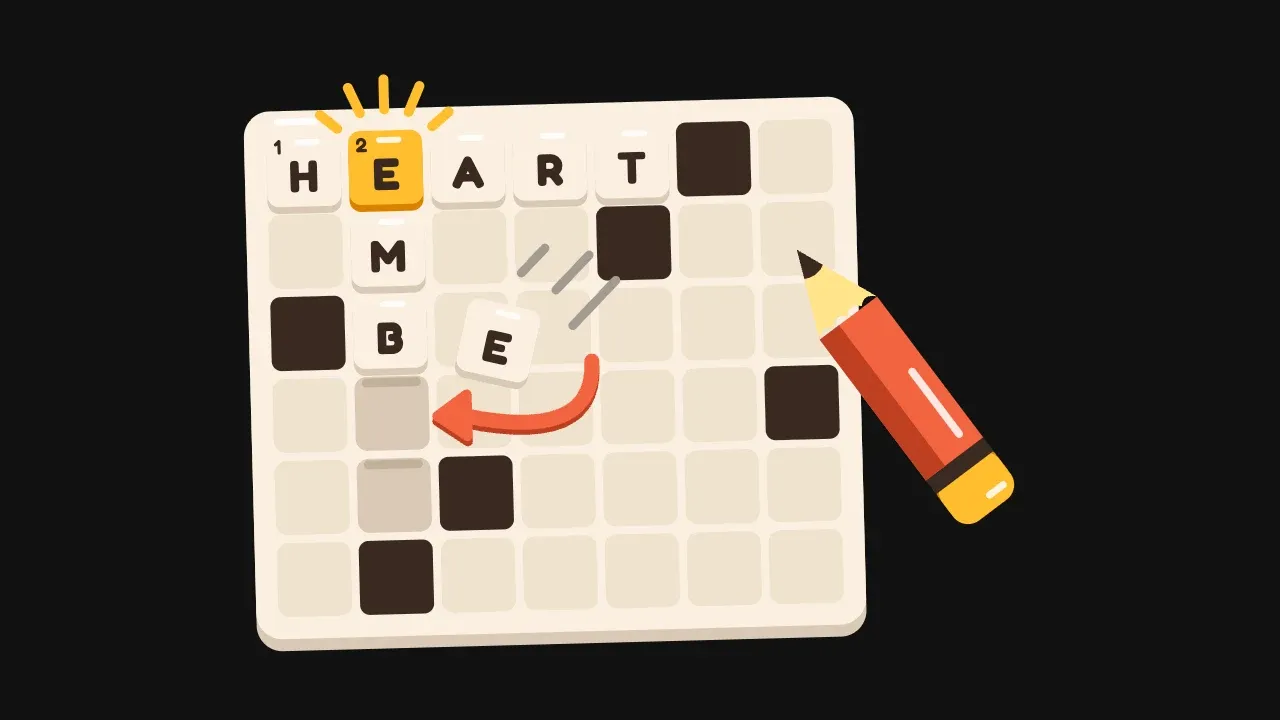
A few weeks later, a typesetting slip in the World turned “Word-Cross” into “Cross-Word”, and the new name stuck. The exact timing is disputed: sources put it within weeks of the first puzzle, or early in 1914. The hyphen was dropped later, giving us crossword.
The puzzle then became a weekly feature in the World.
Before Wynne: the ancestors
Word grids are much older than 1913. Three early examples show the idea was already around:
- The Sator square. An ancient Latin square of five words that reads the same in several directions. It’s a word grid, but not a puzzle with clues.
- Children’s magazines. St. Nicholas magazine ran crossword-like puzzles from 1873.
- Giuseppe Airoldi. On September 14, 1890, the Italian magazine Il Secolo Illustrato della Domenica printed his four-by-four grid. It had no shaded squares, and it had clues across and down. This is why some call Wynne a populariser rather than the inventor.
Wynne’s version mixed the grid, the clues and a weekly habit, and that is what spread.
From one newspaper to a craze
- 1913: Wynne’s puzzle appears in the New York World.
- 1916: the Pittsburgh Press starts running crosswords.
- 1917: the Boston Globe does the same.
- 1922: Pearson’s Magazine in Britain starts one.
- 1924: the Sunday Express in Britain starts one on November 2. The first crossword book, from Simon & Schuster, comes out the same year. It comes with a pencil, and it’s a hit.
- 1942: the New York Times starts its crossword on February 15. Margaret Petherbridge Farrar edits it until 1969.
Over time, black squares in symmetrical patterns became the standard look. Who first used them? Sources differ, so no single person can be credited for certain.
The 1924 craze made the crossword a household habit.
Try it: a mini word-cross
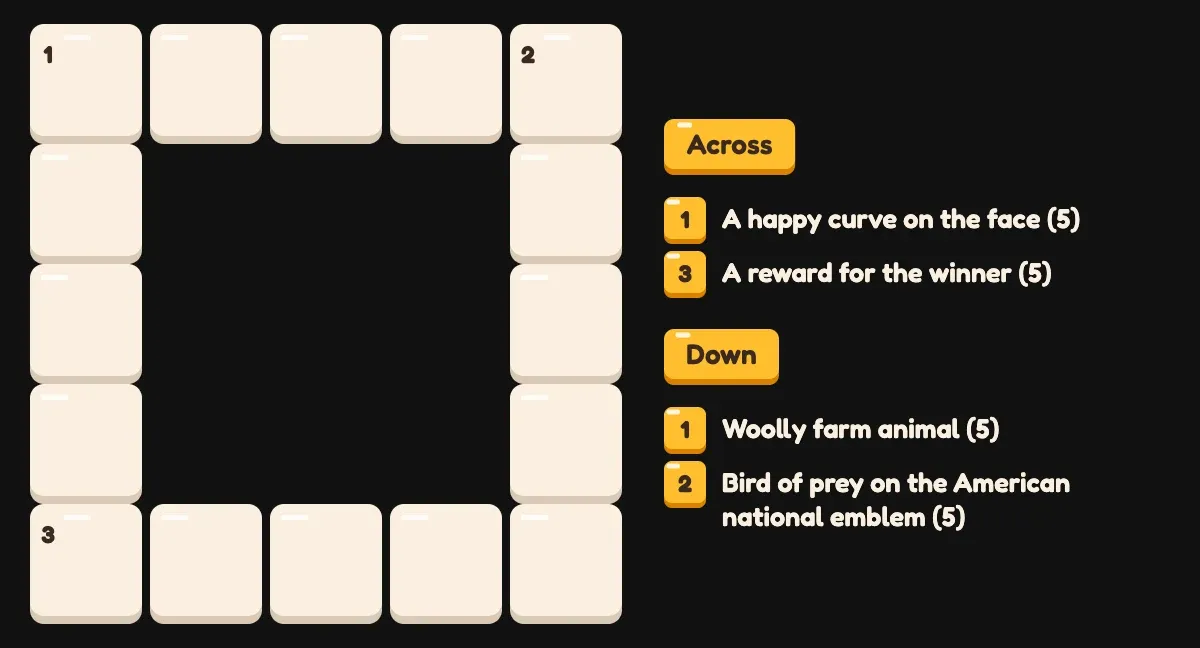
Here is a small word-cross in Wynne’s spirit. Unlike his diamond, this one is a square frame: four five-letter words that share their corner letters. The clues sit beside the grid.
Start with the clue you’re sure of. Each corner is shared. 1 Across and 1 Down start on the same square. 1 Across ends where 2 Down starts. 1 Down ends where 3 Across starts. 2 Down and 3 Across both end at the bottom-right corner.
Show the answer
1 Across SMILE, 1 Down SHEEP, 2 Down EAGLE, 3 Across PRIZE. The shared corners match: S, E, P and E. If you’re unsure between SHEEP and SHEET for 1 Down, the bottom-left corner settles it: 3 Across starts with P, so 1 Down must end with P, which makes it SHEEP.
Keep solving
Thanks to Arthur Wynne, the habit of a crossword with your coffee has a clear starting point. Now you know where it came from.
For tips on solving, read how to solve a crossword. For another word puzzle that changes one letter at a time, try word ladder puzzles.
Mark the calendar: on December 21 this year, Wynne’s first puzzle turns 113.