Stuck for something to do on a long car ride, at a slow dinner or at a party that needs a spark? The would you rather game needs no props and no screen, just people and a question. Below: the rules, three ways to play, a short method for writing good questions and 20 family-friendly questions sorted by age.
How to play the would you rather game
- Rule 1: One player asks a question that starts “Would you rather” and gives two options.
- Rule 2: Each other player picks one option. No “neither” and no “both”.
- Rule 3: Everyone says why in one sentence. Then the next player asks a new question.
You need nothing but people. It works for two players or a whole table, and you can pick questions to suit each age. The choice is the game, so there’s no winner unless you add a score. The next section shows how.
Three ways to play
Style 1: take turns
The asker puts the question to one player, who picks and explains. Then the asker moves on and puts the next question to the next player. It’s a good fit for two or three players and car rides.
Style 2: group vote
The asker reads the question. Everyone points to option A or B at the same time: a hand up for A, a hand down for B. Then people on the smaller side get one sentence to defend their choice. Use it at tables and parties.
Style 3: guess what they pick
Choose a target player. Everyone else writes down, or whispers, a guess of what the target will pick. The target answers. Each right guess scores 1 point. Rotate the target. When everyone has been the target once, the player with the most points wins.
That’s the only style with a score. The other two stay score-free.
A tip for mixed ages: let the youngest player be the target first.
How to write a good would you rather question
- Make both options equally tempting or equally silly. One clearly better? The game ends in one second.
- Have no right answer and no trick. It should be a matter of taste, not of facts.
- Keep each option short. Use one image the listener can see in their head, such as a pet dragon or a floor made of trampolines.
- Fit the age. Keep it concrete and silly for young children. Use trade-offs and imagination for older ones.
- Keep it friendly. Avoid scary or gross-out choices, and personal ones that could embarrass someone at the table, such as about their body, someone they know or their family.
A quick method: pick two good things, or two funny things, from the same area, such as two superpowers, two pets or two homes, and put “would you rather” in front. To start, copy this pattern: “Would you rather have [odd thing A] or [odd thing B]?”
20 would you rather questions for kids and families, by age
Ages 4 to 6
- Would you rather have a pet dragon or a pet unicorn?
- Would you rather have hands like a crab or feet like a duck?
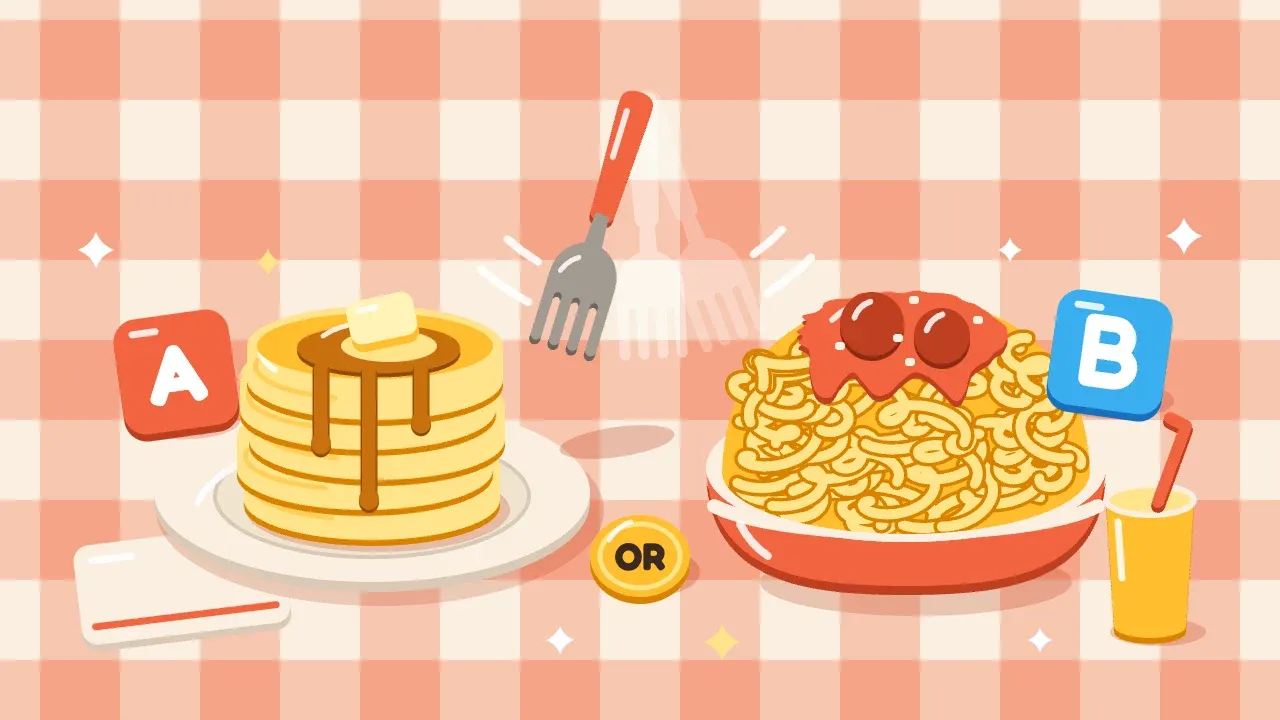
- Would you rather eat pancakes or spaghetti for breakfast every day?
- Would you rather talk to animals or fly like a bird?
- Would you rather live in a treehouse or on a boat?
- Would you rather have a slide instead of stairs or a trampoline floor in your bedroom?
Ages 7 to 10
- Would you rather be tiny for a day or giant for a day?
- Would you rather have a snow day every week or a beach day every week?
- Would you rather have glowing ears or a tail you can wag?
- Would you rather invent a new sport or a new ice cream flavour?
- Would you rather pause time for ten seconds or rewind time for ten seconds?
- Would you rather ride a camel to school or take a zip line?
- Would you rather have a pet that tells jokes but cannot do tricks, or a pet that does tricks but cannot talk?
Ages 11 and up (and grown-ups)
- Would you rather be the best singer or the best dancer in the world?
- Would you rather always be ten minutes early or always be ten minutes late?
- Would you rather give up music or give up movies for a year?
- Would you rather spend a day in the past or a day in the future?
- Would you rather speak every language or play every instrument?
- Would you rather go a month without your phone or a month without sweets?
- Would you rather be famous for something silly or unknown for something amazing?
Make it better with “why?”
- Ask why. After each pick, ask one follow-up: “Why?”, “What would you do first?” or “What is the catch?” The talking is the best part of the game.
- Allow one pass. Each player can skip one question per game that they don’t like, with no explanation needed.
- Let players invent the question. Each player makes one up for the person next to them: a quick way to practise the method above.
- Add a twist. Try a “worst of both” round, where the asker makes both options a little silly, or a “build your own” round, where the group adds one detail to each option before voting.
Play your next round
Try the group vote at dinner with two questions from the lists, then let the youngest player invent one. Want more ideas? Read I Spy for Kids on a Road Trip, with more no-prop car games, or How to Play Charades, a game for when a table wants to move.