Charades is the party game for the moment when everyone wants a round and nobody remembers how to play charades. This post covers the rules in five steps, what the actor can and can’t do, the standard signals one by one, easy words to start with and tips for guessing faster. You need no props.
How to play charades in 5 steps
Charades is acting without words, so it needs only paper, a bowl and a timer.
- Teams. Split into two teams. With fewer than four players, take turns as one group instead.
- Words. Everyone writes five words or titles on slips of paper and folds them into a bowl.
- Acting. One player per turn draws a slip, keeps it hidden and acts it out without speaking.
- Guessing. Teammates shout guesses. The round lasts 60 seconds, so set a phone timer.
- Scoring. A right guess scores 1 point for the team. Then the next player from the other team goes. After everyone has acted twice, the team with the most points wins.
The actor’s rules: what you can and can’t do
- Allowed: gestures, facial expressions, moving around and acting out with the whole body. Nodding or shaking your head to answer a guesser’s question is fine too.
- Not allowed: speaking, making sounds, mouthing words, or spelling letters in the air or on your body.
- Pointing: no pointing at objects in the room. Pointing at your own body is fine, for example at your teeth.
- Skips: each actor may skip once per turn. The skipped slip goes back in the bowl.
Guessers can shout as often as they like, but only the exact word or title scores. When a guess is close, the actor uses the “close” signal below.
The standard charades signals, step by step
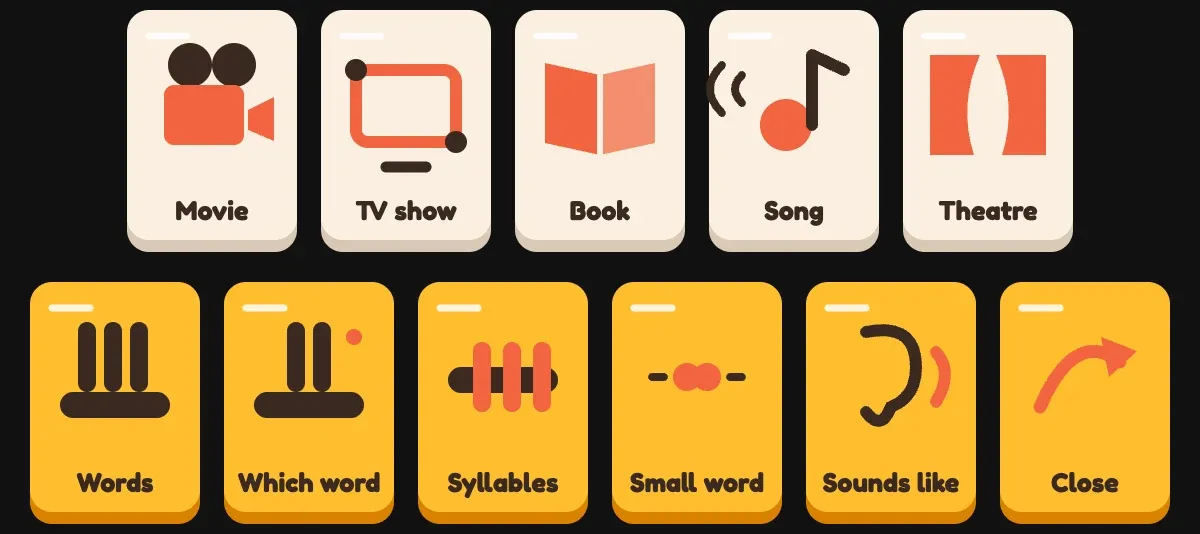
Signals are the shortcut that lets guessers narrow things down in the first seconds. Signals vary from group to group, so agree on yours before the first round. These are the common ones.
- Movie or film: crank an imaginary old camera in front of one eye.
- TV show: draw a rectangle in the air with both hands, for the screen.
- Book: open your hands like a book.
- Song: cup a hand to your mouth and mime singing, with no sound.
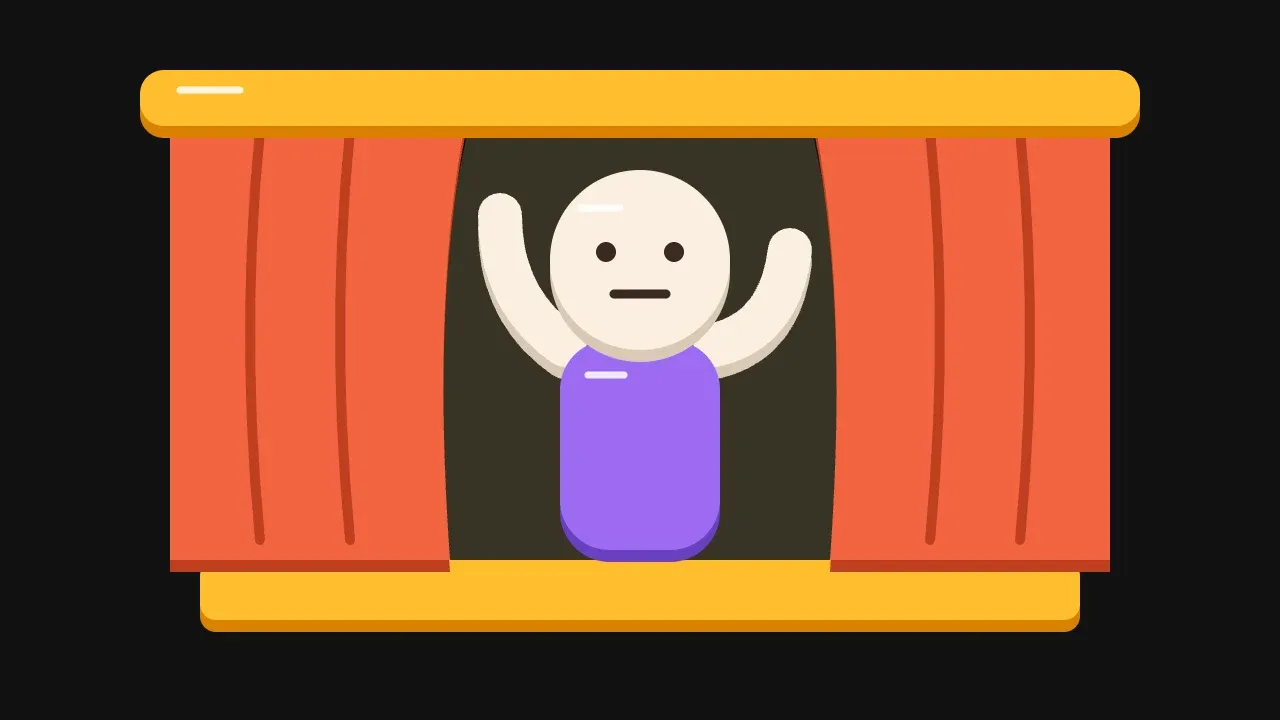
- Play or theatre: pull imaginary curtains apart.
- Number of words: hold up that many fingers in front of you.
- Which word: after showing the number of words, hold up the number of fingers for the word you act now. For a title with three words, show three fingers, then two fingers for the second word.
- Syllables: lay that many fingers on your forearm, one per syllable.
- Small word (a, the, of, in): pinch your fingers close together, or leave a small gap between thumb and finger.
- Sounds like: cup a hand behind your ear, then act something that sounds like the word. For “knight”, act “night”.
- Longer or shorter: pull your hands apart for a longer word, such as “hungry” to “hungrier”, or push them together for a shorter one.
- Plural or past tense: tug on your sleeve for plural. Wave a hand back over your shoulder for past tense.
- You got it: point at the person who guessed right, or give a thumbs up.
- Close: make a scooping “come here” wave with your hand.
Easy charades words to start with, by category
Eight words in each category, all easy to act out and one to three words long. Print this list or keep it for next time.
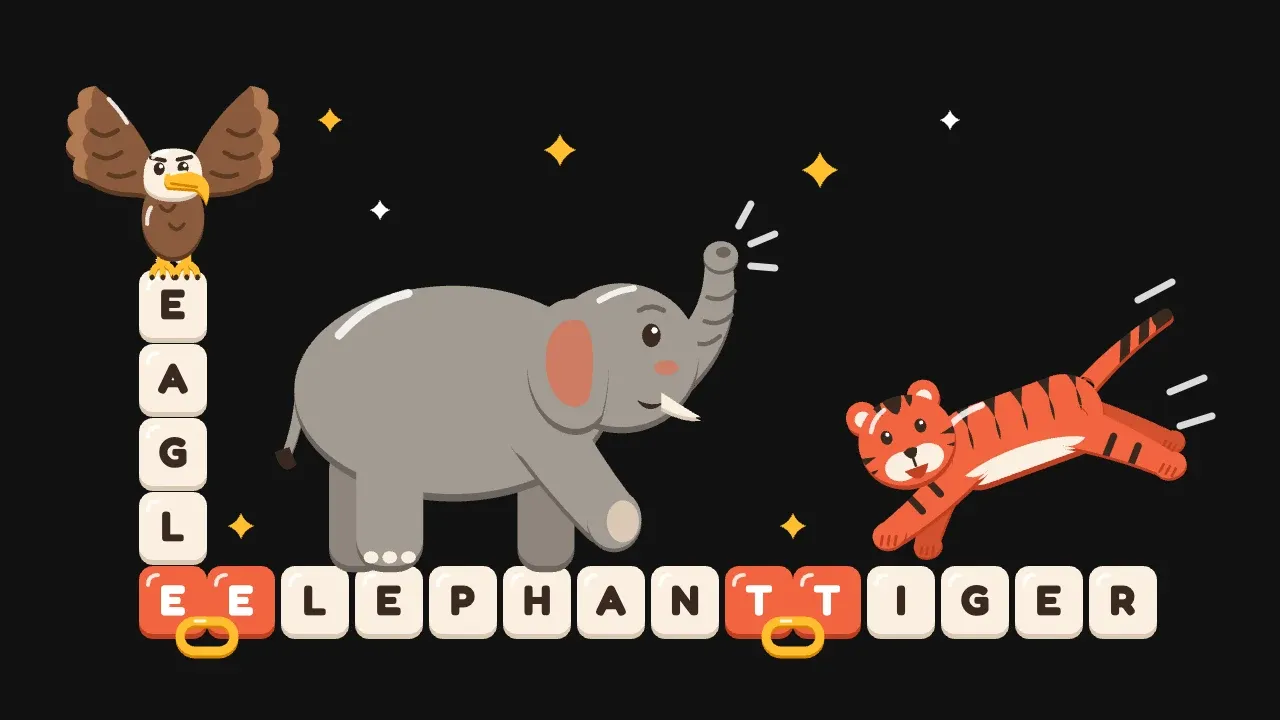
- Animals: elephant, monkey, penguin, kangaroo, snake, frog, chicken, dog.
- Actions: brushing teeth, swimming, sleeping, dancing, cooking, driving, taking a photo, fishing.
- Jobs: doctor, firefighter, teacher, chef, farmer, pilot, painter, singer.
- Everyday objects: umbrella, telephone, toothbrush, guitar, bicycle, scissors, camera, clock.
- Famous things: Santa Claus, pirate, mermaid, cowboy, superhero, robot, ghost, dinosaur.
Charades for kids and beginners: how to make it easier
- Show the category first. Pick one category and stick to it for the whole game, such as only animals or only actions.
- Give more time. Use 90 seconds instead of 60 for young players. An older helper can whisper the word to the child and act it out alongside them.
- Draw the words. For children who can’t read yet, draw each word on its slip.
- Rotate. Let everyone act once before anyone goes twice.
How to guess faster
- Shout single words, not full sentences. The actor reacts to each one, so you get the signal sooner.
- Use the category signal. Only guess in that category once the actor has shown it.
- Guess word by word. When the actor shows which word they are on, shout that word first, then the whole title.
- Try variations. Shout “run”, then “running” or “runner”. The plural and past tense signals will show which ending is right.
- Split up. Don’t all guess the same word. One person calls out nouns and another calls out actions.
- Watch the actor’s face, not just the hands.
How to act out a hard word
- Break it into smaller words or syllables. Act each part, then press your hands together to show the parts make one word.
- Act what it does, where it is, or who uses it, in that order.
- Example: toothbrush. Show two words with two fingers. Point at your teeth, which is allowed because it is your own body, then mime brushing for “brush”.
- Skip after 20 seconds. If the word is still stuck by then, use your skip.
Put it into practice
Pick a category and a timer, and start a round now. For another game with no props, try I spy for kids on a road trip. For more ways to fill a wait, see games to play at a restaurant while you wait for food.