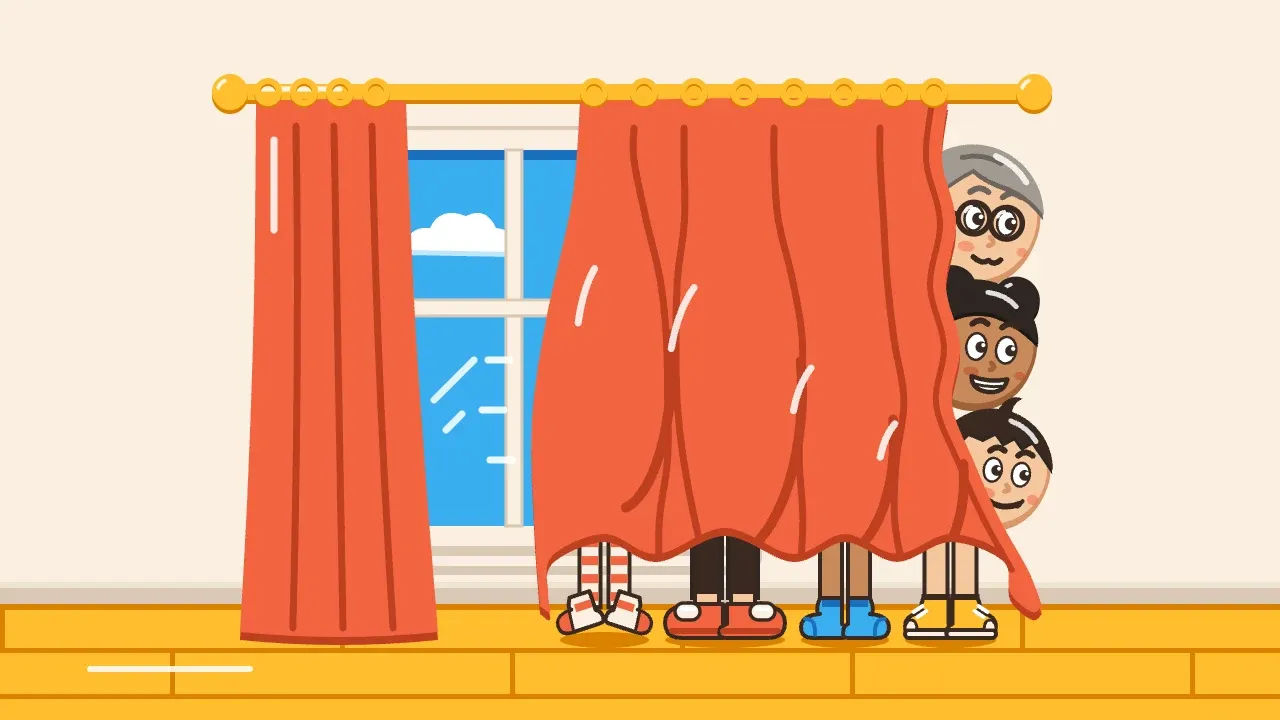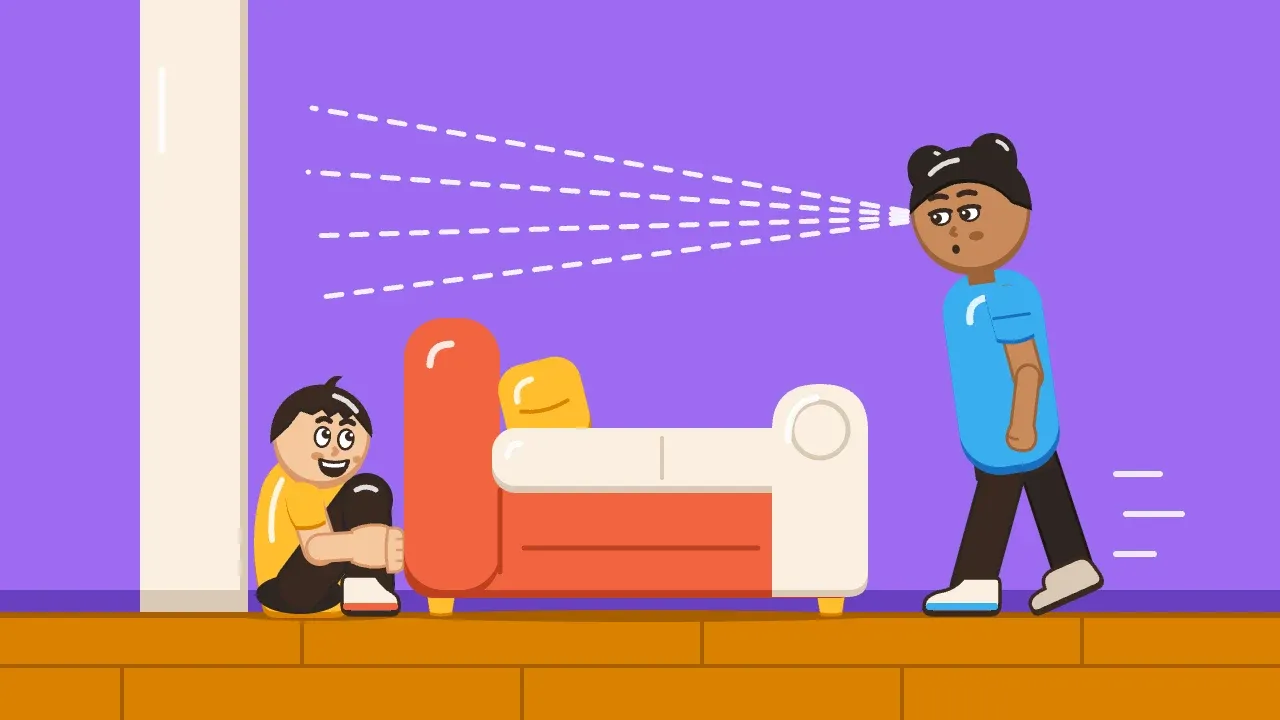
The best hiding spots for hide and seek cover you from every side, are small, sit off the seeker’s path and let you stay still. Each of the 12 spots, 8 indoors and 4 outside, comes with why it works and the one slip that gives it away. After that: a few tricks that matter more than the spot, tips for different ages and the places you should never hide.
Four tests for a good hiding spot
Run any spot through these before the count ends:
- Covered from every side. A seeker walks in from a door and sees one angle. You need to be hidden from the others too. Fatherly’s Navy SEAL tips favour spots with cover from several angles, such as sofas, long curtains and beds.
- Small. The less of the room you take up, the less there is to spot. Small and fully covered beats big and open.
- Off the seeker’s path. Where will they walk first? Pick a spot that isn’t on the way.
- Comfortable enough to stay still. If your leg’s cramping in 30 seconds, you’ll move, and movement gives you away.
Spots that fail one test are how people get found: a curtain with your shoes showing under it, a sofa with your elbow past the arm. Under the bed only works when no foot, hand or sock shows.
Indoor hiding spots, room by room
None of these come with a guarantee. They’re suggestions, and a seeker who knows your house will check some of them. Pick the one that fits your room and your size.
Living room
1. Behind a sofa pulled a hand’s width from the wall. The gap is just big enough to sit in, and the sofa covers you from the room. Curl up with your knees in. The giveaway is a sofa that’s visibly out of line, so slide it only as far as you need.
2. Under a throw blanket on an armchair. Pull your knees up, drape the blanket over yourself and let it fall the way it normally would. A smooth, flat blanket looks like furniture. A lumpy one looks like a person. A kid-sized den of cushions and a blanket works the same way.
3. Behind a door that opens flat against the wall. Stand in the gap and keep your feet tucked against the wall. A seeker who opens the door from the other side sees only the door. The giveaway is a seeker who pushes the door shut to check, so stay put and breathe softly.
Kitchen and hall
4. Under a table with a long tablecloth. The cloth hides everything below the tabletop, so tuck your feet in and keep your back off the cloth. The giveaway is a cloth that swings after you duck under it. Wait until it stops moving.
5. Behind a row of hanging coats. Hall coats cover you from the front, and a coat that’s a bit big is better. Check your shoes first. Feet under a hem are how a coat spot fails.
A low kitchen cabinet may look like a perfect fit, but it’s best skipped. It’s only worth a thought if it opens easily from inside and isn’t airtight, and the safety section below shows why that matters.
Bedroom
6. Flat between the bed and the wall. Lie on the floor, not sitting up. The Gateway’s tips say seekers scan at eye level and often overlook the ground, and Fatherly says to stay low so you don’t cast a shadow. The giveaway is a bedspread that hangs lower on one side than the other, so leave it as you found it.
7. In a pile of cushions or clean clothes. Make the pile before the count starts, if you’re allowed, then settle into it. Why does it work? A pile looks like it belongs there. The giveaway is an edge of fabric that’s a different colour from the rest, so cover everything.
Bathroom
8. In the empty bathtub, with the curtain drawn. A closed curtain looks like a normal bathroom. Climb in dry and slowly, since a wet tub is slippery, and sit low. The giveaway is a curtain that bulges or swings, so keep your back off it.
Outdoor hiding spots
Outside, agree the boundaries before anyone hides: the garden, the park corner, where the road starts. Don’t let anyone see which way you head off. If it’s getting dark, switch to Flashlight hide and seek from the hide and seek variations and give the seeker a light.
9. Behind a tree trunk that’s wide enough. Stand with your whole body behind the trunk and keep your shoulders and feet in line. The giveaway is a skinny trunk: if your arm sticks out on either side, pick another tree. Shift around the trunk only when the seeker’s looking the other way.
10. Low at the edge of a bush. Crouch down inside the edge, where the leaves are thickest. Why stay low? Seekers scan at eye level, so it’s the whole point. Pick a bush without thorns, and watch out for a bright jacket, since colour shows through leaves.
11. In a play-house or a slide tunnel. A play-house at the park or in the garden is made for this. Sit away from the door and window, where the light doesn’t reach. The giveaway is a play-house a seeker can see into through its window, so check from outside first.
12. Flat against a fence corner or a wall. Press into the angle so you’re narrow from both directions, and stay there. The giveaway is a corner that’s right next to the seeker’s counting spot, so keep a few steps’ distance.
Stay out of cars, sheds and garages, and don’t hide on anyone else’s property. The safety section covers why.
Hiding tricks that matter more than the spot
A good spot helps, but how you use it is most of the game.
- Choose your spot in advance. The Gateway advises picking spots and planning a route beforehand, and checking corners before you move past them. Penguin’s hide and seek guide adds that you shouldn’t let others see where you hide.
- Stay low and breathe slowly. Fatherly says to breathe slowly and deeply rather than hold your breath, and that “Nothing attracts the eye like movement.”
- Double back. Two tips pages make the same point. A Navy SEAL’s tip reported by Fatherly is that seekers rarely re-check a room, so you can wait in one that’s already been searched. The Gateway says “The seeker rarely ever checks the place they started counting.” Both are tips, not studies, but they cost you nothing to try.
- Use what’s new in the room. Fatherly mentions the box a new dishwasher came in as a spot that can go unnoticed, and decoy pillows under a blanket to draw a seeker away.
- Pick a spot you can reach in time. One you can get to before the count ends beats a perfect one across the house.
Should you move while hiding?
The sources pull both ways. Fatherly says “Nothing attracts the eye like movement,” and also says to circle back into a room that’s already been checked. The Gateway says keep moving and double back, and Penguin says hiders can move whenever the seeker isn’t looking. So who’s right? A rule that fits all three is to stay put once the seeker is near, and move only when they’re out of sight or looking elsewhere.
Hiding spots for different people
Ages 3 to 5. Keep the count short and the spots easy: a blanket, the space behind a curtain, a big cushion. If you’re the grown-up seeker, take your time finding them, and say “Where could they be?” out loud. The NHS lists active play like hide and seek among ideas for under-5s, and says pre-schoolers (aged 3 to 4) should spend at least 180 minutes a day on physical activities of different kinds. When it’s time to wind down, try quiet games for kids.
School age. Most of the spots above fit this group well. Small bodies fit gaps adults can’t, so spots 1, 6 and 8 are good ones to start with.
Teens and adults. Use a bigger space, add a time limit and go for the spots that seem too obvious. Hiding where the seeker just looked is a harder move. A teen can hold still in a spot that’s tight for the rest of the group.
Where you should never hide
Some spots are dangerous, and no game is worth the risk. The rule’s simple: don’t hide anywhere that seals or latches, or that a child can’t open from inside.
- Old refrigerators and freezers. The US Consumer Product Safety Commission (CPSC) says older chest freezers, made from 1945 to 1970, can have latches that trap children playing hide and seek, and suffocation can occur in less than ten minutes. It counted 27 children aged 2 to 14 who died in such freezers between 1980 and 1999. A 1984 CPSC release recorded 96 child deaths from refrigerator entrapment since 1973. Under the 1956 Refrigerator Safety Act, new fridges must open from inside, but old ones are still around.
- Chests, trunks and toy boxes. The CPSC says children climb into storage and toy chests to hide or sleep and suffocate, because the space is airtight and some lids latch on their own. It reported 34 deaths since 1996 as of March 2014.
- Washers and dryers. UL Standards says small children can climb into a front-loading washer or dryer, the door can close and someone may start the machine. The American Academy of Pediatrics says to make a rule that washers and dryers aren’t toys.
- Cars and car trunks. Kids and Car Safety says a trunk may seem like a good hiding spot, but children don’t understand how quickly the temperature rises inside it. If a child goes missing, it advises checking the inside and trunk of all vehicles in the area, even locked ones.
Add a few house rules of your own. No climbing high, no locked rooms, and stay inside the rooms or the garden you agreed. Set a “come out when called” signal before the first round, and everyone comes out the moment they hear it, even in the middle of a great hiding spot.
Practise on a screen
Not enough rooms, or too much homework to play for real? Try it with Hidey Hedge, a free 3D hide and seek game in your browser: drag to run and stay out of the flashlight.
It’s a quick way to think about when to run and when to freeze. There are more free browser games on the site. If the house is full or it’s raining, play I spy for kids instead, or make an escape room at home and hide the clues, not the people.
Frequently asked questions
What is the best hiding spot in hide and seek?
The best spot covers you from every side, is small, sits off the seeker's path and lets you stay still. Behind a sofa pulled a little from the wall, or flat between a bed and the wall, passes all four tests.
Where do seekers never look?
No spot is never checked, but two tips pages say seekers often overlook the ground, rarely re-check a room they've already searched and rarely check the place where they counted. Something that has changed in the room can go unnoticed too.
Is it better to hide in a small space or a big one?
A small space that covers you completely usually beats a big, open one. Never pick a space that seals or latches shut, however small it is.
What are good outdoor hiding spots for hide and seek?
Behind a tree trunk wide enough to cover you, low at the edge of a bush, inside a play-house or slide tunnel, or flat against a fence corner. Agree the boundaries first and stay out of cars, sheds and garages.
Should you move while hiding?
Stay put once the seeker is near, because movement catches the eye. Move only when the seeker is out of sight or looking away, for example to double back to a room they've already searched.
Sources
- Hidey Hedge: Free Hide and Seek Game, Play Online · EnjoGames
- Hide and Seek Variations: 9 Twists for Any Age
- CPSC, Appliance Manufacturers Announce Voluntary Recall Initiative for Old Chest Freezers
- CPSC Warns About Children Suffocating In Old, Unused Referigerators
- CPSC Warns Consumers of the Deadly Dangers of Storage and Toy Chests
- UL Standards & Engagement, Helping to Prevent Child Entrapment in Household Refrigerators
- UL Standards & Engagement, Mitigating Hazards to Small Children from Front-Loading Washers and Dryers
- American Academy of Pediatrics, Laundry Room and Detergent Safety
- Kids and Car Safety, Trunk Entrapment
- NHS, Physical activity guidelines for children (under 5 years)
- Fatherly, A Navy SEAL's Tips On How To Dominate Hide-And-Seek
- The Gateway, Tip and tricks on how to succeed in Hide and Seek
- Penguin Books UK, How to play the best game of hide and seek ever