Your board is full, nothing matches, and the next tap has nowhere to go: that’s the moment merge game tips are for. These habits are general merge puzzle strategy: they work across merge games. Here are six of them, with small before-and-after examples, a checklist for your first minute and the mistakes to avoid.
How merge games work (in 30 seconds)
New to merge games? Here’s how to play. You join matching items to make one item of the next tier. The board has limited room, so every merge builds something and frees space.
- Three identical items make one item of the next tier. Some games need only two, so check the rule of your game. The examples here use three.
- A generator (a tap, a chest or a drop) puts a low-tier item onto a free cell. Using it may cost energy, time or moves.
- The tiers are called T1, T2, T3 and so on, with T1 the smallest item.
The whole game comes down to one question: where will the next item go?
1. Keep space free
The habit: always leave several empty cells, because a full board is where a run gets stuck. As a rule of thumb, never let the free cells drop below 3. It’s a rule of thumb, not a rule of the game.
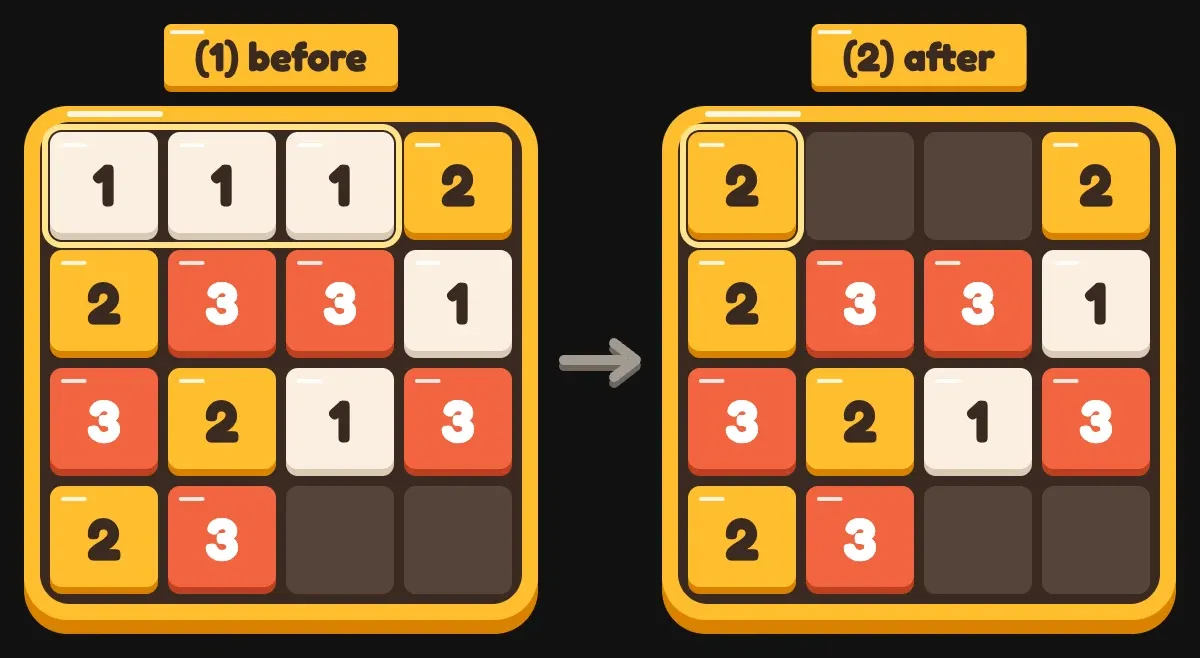
Before the merge the board has 14 items and 2 free cells. Merge three 1s into one 2 and you have 12 items and 4 free cells. One merge of three frees two cells.
Why does it work? Every tap on a generator adds an item, so with 2 free cells the board is full after two taps.
Ways to make room: merge the small items first, use or sell items you don’t need where the game allows it, and keep items in one tidy group rather than scattered around the board.
2. Merge from the lowest tier up
The habit: start with the smallest items, because a merge there often makes the match you need one tier higher.
Take a board with three T1 and two T2, five items in all. Merge the three T1 into one T2, and you have three T2. Merge those into one T3. Five items have become one.
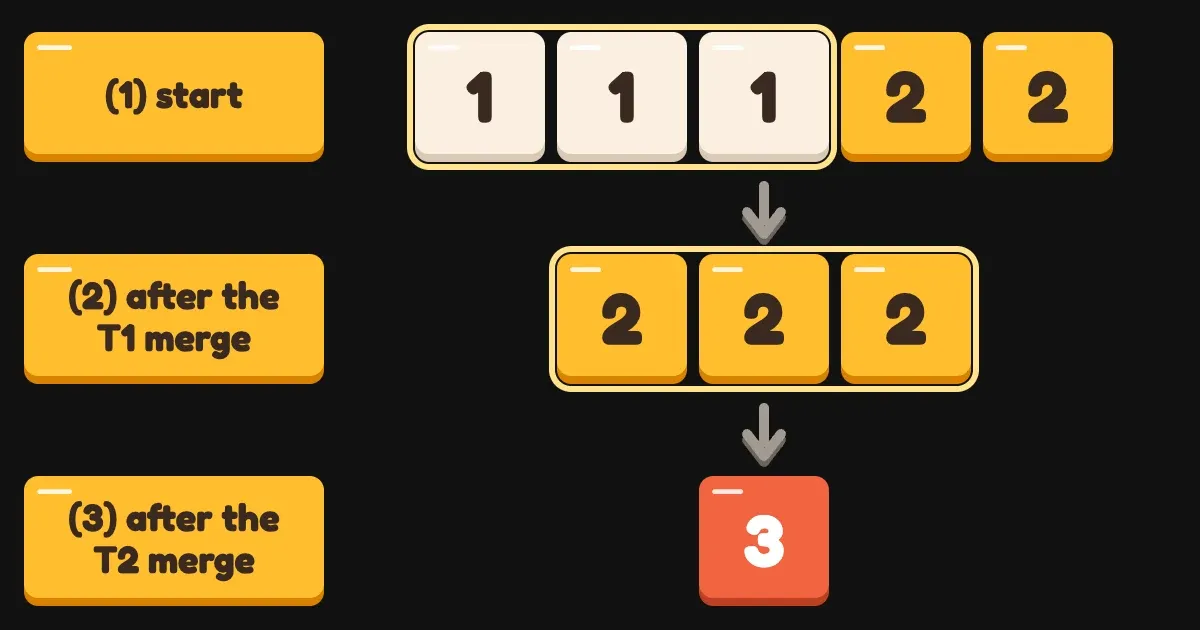
Start by hunting for a higher match instead and you’d find only two T2, with no merge to make. The low merge opened the way to the high one.
Why does it work? Small items often pile up and clog the board. Clearing them makes room and starts chains.
3. Count first, then plan around your biggest merge
The habit: before you tap, count each tier and decide the biggest item you can reach. Then work toward that, not whatever is nearest.
Say the board holds seven T1 and two T2. Merging two groups of three T1 makes two more T2, so there are four T2 and one T1 left. Three of those T2 make one T3 and leave one T2. The end: one T3, one T2 and one T1.
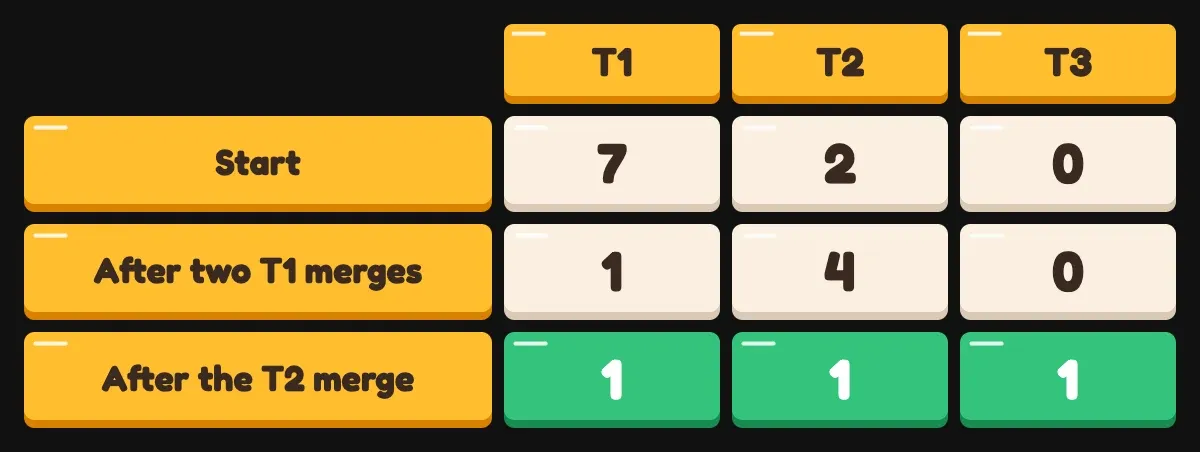
The one T1 and the one T2 left over are what you need to find next. Knowing them tells you which item to look for. Don’t hold a pair for long. Keep a pair waiting only when you know where the third will come from.
4. Do not rush the generator
The habit: tap a generator only when you have room and a plan, because every tap may spend energy or moves and adds clutter.
Take a 4x4 board with 13 items and 3 free cells. Three quick taps fill the board, and the next tap has nowhere to go unless a merge is ready. Merge first and you’d have room to work.
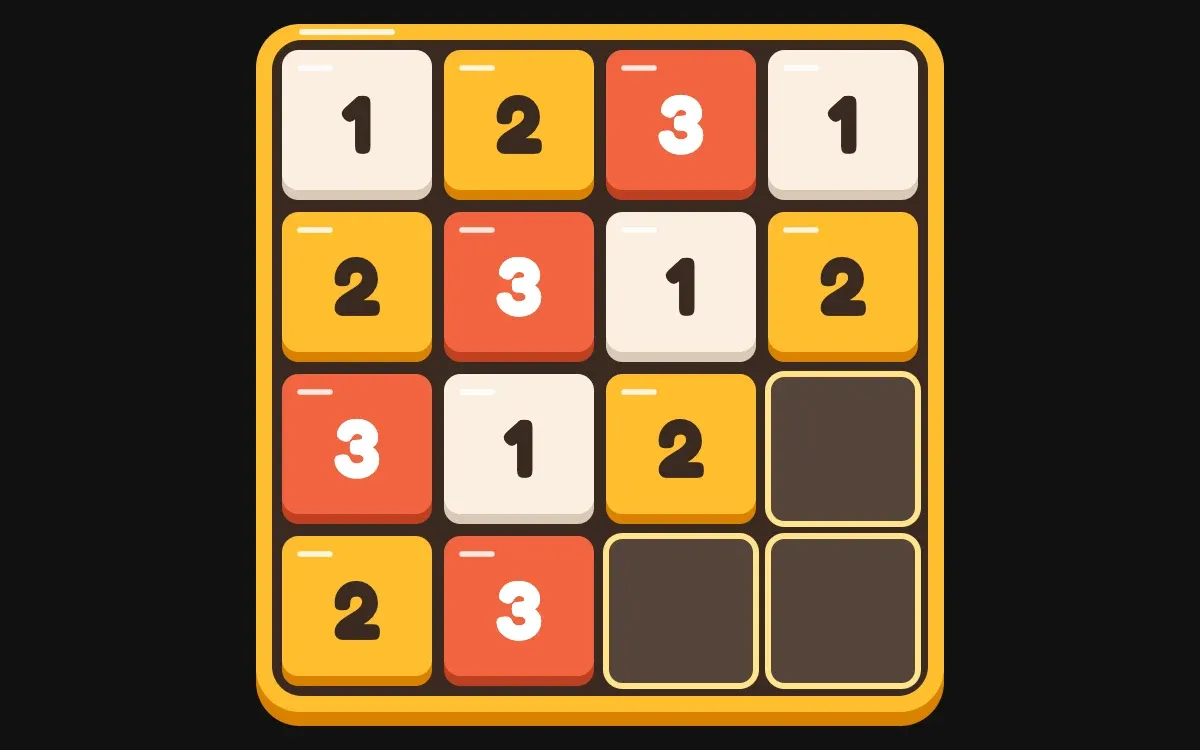
Tip: when your energy runs out, use the time to plan and merge what you already have. Check your game’s rules on what a merge costs, since games differ.
Don’t spend real money early. The habits here matter more than spending.
5. Stop and think before you tap
The habit: spend ten seconds scanning before each batch of moves, looking for the groups, the tier closest to a merge and the free cells. Want to get better at merge games? Start with this habit.
Routine: look at the board, name the next merge, check which cells it frees, then tap. Hasty taps scatter items and make matches harder to see.
Logic puzzles use the same look-before-you-move habit. How to get better at logic puzzles covers it.
6. Merge bigger groups when the game allows it
The habit: if your game lets you merge four, five or more identical items at once, use it. Some games also give a bonus for a big merge, so read the game’s own rules for what the bonus is.
Why try it? One move with a big group clears more cells at once. Don’t stop at three when five are ready just to be quick. And don’t wait for a huge group until the board fills up.
Merge game tips: a quick checklist for your first minute
- Count the free cells.
- Merge the smallest items first.
- Count each tier, and pick the biggest merge you can reach.
- Tap the generator only with 3 or more free cells.
- Pause for ten seconds before each batch of moves.
- Use bigger groups when the game allows them.
Common mistakes
- Letting the board fill up.
- Hoarding every item.
- Tapping the generator without room.
- Merging at random.
- Chasing the top tier while ignoring the small clutter.
Try the checklist on your next board. Want the thinking-ahead habit? See how to get better at logic puzzles. For a careful way of looking at a crowded scene, see hidden object game tips.