Want to know how to play bingo at home without a bingo set? You’ll only need paper, a pen, a few small markers and one person to call the numbers. Below: the rules in a few short steps, five winning patterns, no-number versions for kids, and a way to make cards that really differ. Everyone plays at the same time, so the whole family or the whole party can stay in.
What you need
- Cards: one for each player. The sections below show how to make them.
- Markers: coins, buttons, dried beans, torn bits of paper, or just a pencil cross.
- Slips: the numbers 1 to 75, each written on its own slip of paper and kept in a bowl or hat for the caller. A full set takes about five minutes to make.
Who can play? Two or more. One is the caller, who can play a card too. How long is a round of the line pattern? About 10 to 15 minutes. Numbered cards need players who can read numbers; the no-number versions don’t.
How to play bingo at home: the rules in six steps
This is the standard game with 75 numbers.
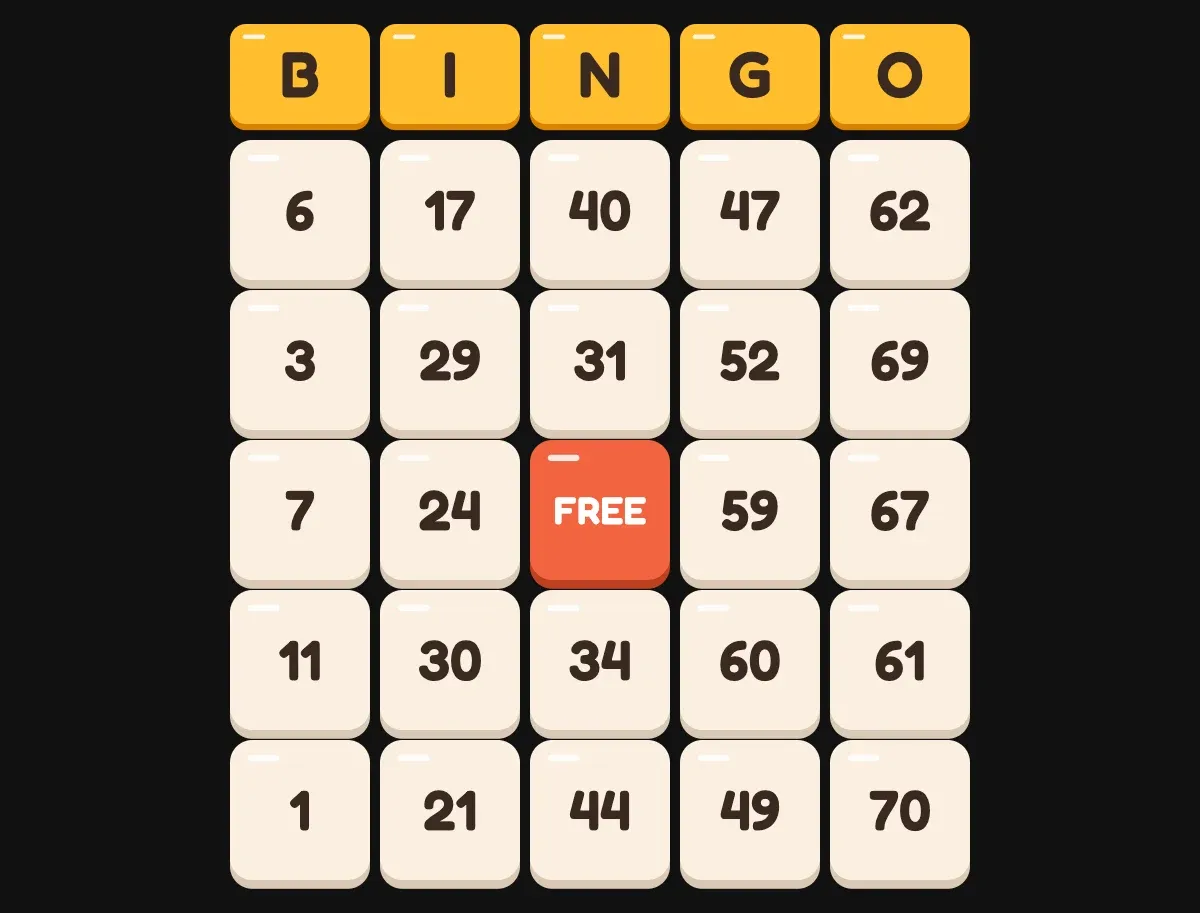
- Each player gets a 5 by 5 card with the letters B, I, N, G and O across the top.
- The centre square is a free space. It counts as marked from the start.
- Each column uses its own numbers: B 1 to 15, I 16 to 30, N 31 to 45, G 46 to 60 and O 61 to 75.
- The caller draws a slip, reads its letter and number aloud (such as “G 52”) and sets the slip aside, not back in the bowl.
- Anyone with that number on their card marks it.
- The first player to complete the agreed pattern shouts “Bingo!” The caller checks the card against the slips called so far.
Agree the pattern before the first call. A straight line, across, down or diagonal, is the usual first pattern: a card has 12 possible lines.
Say the letter and the number together, and say the number again. Two players complete a pattern on the same call? Agree before you start whether both win or they play a quick tie-break round.
What a card looks like
Bingo patterns: 5 shapes to win with
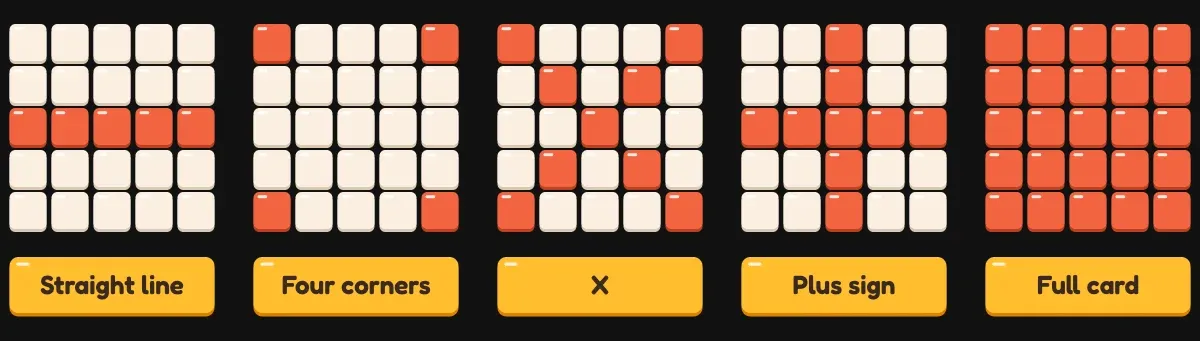
Shaded squares are the ones to cover.
- Straight line: a full row, column or diagonal. The usual first pattern, since 12 different lines can win.
- Four corners: the four corner squares. Only four to cover, so it’s a short and chancy round.
- X: both diagonals, nine squares including the free centre.
- Plus sign: the middle row and the middle column, nine squares including the free centre.
- Full card, also called coverall: every square on the card, 25 in all with the free centre. The longest round, since it can take almost all 75 numbers. Use it as the last round.
Tip: play one pattern per round and make each next one harder, or let the winner of a round choose the next pattern.
No-number bingo: picture, colour and task versions
Not everyone can read numbers yet. A game that doesn’t depend on reading lets mixed ages play together.
- Picture bingo: a 3 by 3 card with a drawing in each square (animals, fruit, shapes). The caller holds up a matching picture card or a real object, and players cover the same picture. Three in a row wins.
- Colour bingo: a 3 by 3 or 4 by 4 card with coloured squares, made with crayons. The caller names a thing of one colour, such as “a red apple”, and players cover a square of that colour.
- Task bingo: each square holds a small action, such as “hop three times” or “name an animal that starts with B”. The caller reads a task, and anyone who does it marks that square.
- Scavenger or walk bingo: each square holds a thing to spot, such as a bird, a red car or a dog. Mark a square when you see it; the first to a line wins. It works on a walk or in the car, like the I spy for kids on a road trip game.
- Sight-word or spelling bingo: the same game, with words on the squares.
How to make bingo cards with paper and a pen
To make a number card:
- Draw a 5 by 5 grid on a sheet of paper; squares about 3.5 cm wide fit on A4 or letter paper. Write B, I, N, G and O above the columns.
- Write FREE in the centre square.
- For each column, pick numbers from its range and write them down the column in any order: five from 1 to 15 for B, five from 16 to 30 for I, four from 31 to 45 for N (the free centre is the fifth), five from 46 to 60 for G and five from 61 to 75 for O. No number may repeat on a card.
To make cards that really differ, write each column’s numbers on slips, shuffle them, and take the top five in order (four for N). There are 360,360 ways to pick five numbers in order from the 15 in one column alone, so two shuffled cards almost never match. Don’t copy a neighbour’s card.
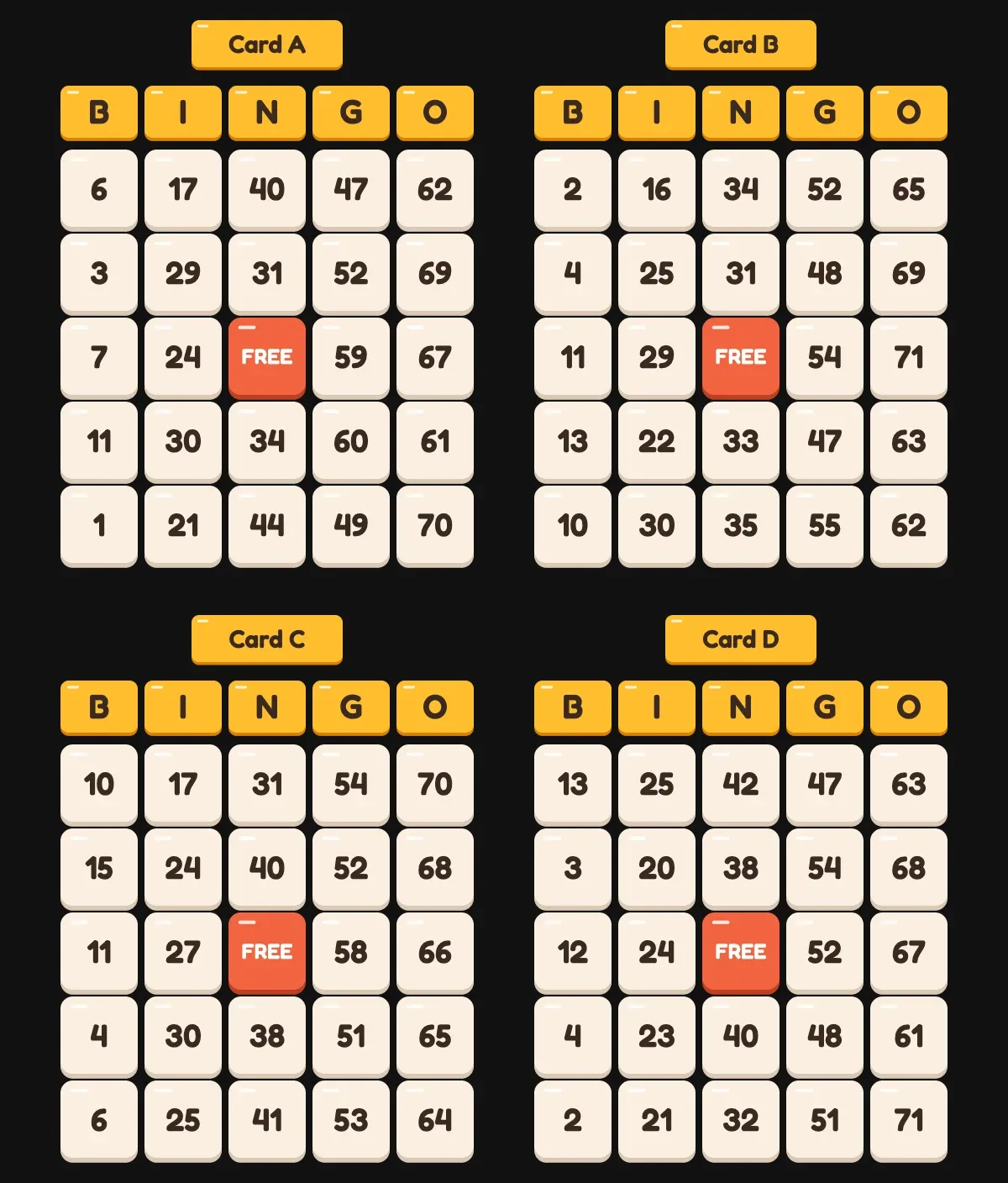
Cards for children? Use the picture, colour or task squares on a 3 by 3 or 4 by 4 grid, shuffled differently on each card. A family? Make one card per person.
Tips for a smooth game at home
- Let children take turns as the caller; reading the numbers aloud is practice with number names. Keep the first round short: a 3 by 3 card, with a line only.
- Give the winner of a round the next turn as caller instead of a prize. A small treat is optional.
- Keep rounds quick: after a bingo, clear the cards and start the next pattern.
- Common mix-ups: marking a number that was never called, forgetting the free centre counts as marked, and calling bingo before checking the card. Agree a house rule for a wrong call, such as sitting out one number.
Your first game: put it into practice
For a first game, try two or three players, the line pattern, one caller and cards made by the shuffle method. On the next round, try four corners, or the picture version for younger players.
Want more no-prop games for kids? Read the I spy for kids on a road trip post. For more games on paper, try 10 games to play at a restaurant while you wait for food. Which pattern or variation did your family like best?